
How to Make a Website for Your Business: DIY or Agency?
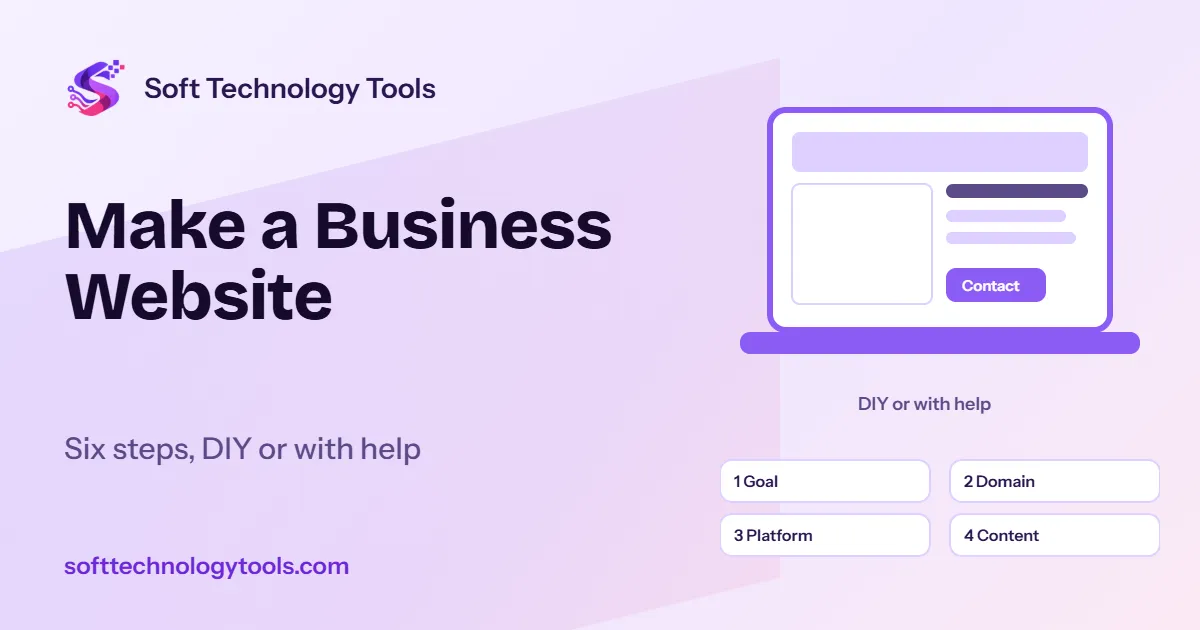
To make a website for your business, you need five things: a clear goal, a domain name, a platform to build on, the content (text, photos and contact details), and a way for Google and customers to find it. You can do all of this yourself with a website builder, or hire a developer or agency to do it for you. Both routes work. The right one depends on your time, your budget and how much the website has to do.
This guide walks through the steps in order and gives an honest comparison of DIY and hiring help, so you can decide before you spend anything. If you have been searching “website kaise banaye”, the steps below are the same whether your site is in English, Urdu or both.
Step 1: Decide what the website must do
Start with the one action you want visitors to take. For a clinic it may be booking an appointment. For a trading firm it may be sending an enquiry. For a shop it may be ordering online or messaging on WhatsApp.
Then list the pages you need. Most small business websites start with:
- a home page that says clearly what you do and where;
- a services or products page;
- an about page;
- a contact page with phone, WhatsApp, email, address and a map;
- a form for enquiries or bookings, if you want one.
Keep the first version small. You can add a blog, more service pages or an online store later.
Step 2: Choose and register a domain
Your domain is your web address, such as yourbusiness.pk or yourbusiness.com. Choose something short, easy to spell and close to your business name.
In Pakistan, .pk domains are managed by PKNIC, and you can register directly or through a hosting company that resells them. PKNIC’s pricing page listed Rs. 2,100 per year for Pakistan-based registrants in October 2026, charged for two years at a time. Prices can change, so check before you buy.
Most important: register the domain in your business’s own name and email. If someone else registers it for you, make sure it is still in your name and that you have the login.
Step 3: Pick a platform
The platform is the software your website runs on. The main choices for a small business are:
| Platform | Suits | Keep in mind |
|---|---|---|
| Website builder (hosted) | A simple site you build yourself | Monthly fee, limited flexibility, can be hard to move away |
| WordPress (self-hosted) | Most business sites and blogs; very flexible | You need hosting, updates, backups and security care |
| Shopify | Online stores | Monthly plan in US dollars; see our Shopify in Pakistan guide |
| Custom build | Special features, portals, unusual workflows | Needs a developer to build and maintain |
WordPress is the most widely used option. W3Techs reported in October 2026 that it runs 39.6% of all websites it surveys. Self-hosted WordPress is free software, but you need hosting that meets its requirements. WordPress.org recommends PHP 8.3 or greater, MySQL 8.0 or MariaDB 10.11 or greater, and HTTPS support.
If you plan to sell online, read our guide to ecommerce website cost in Pakistan before choosing.
Step 4: Prepare your content
Content takes longer than most people expect, so start early. You will need:
- Text for each page, written for your customers: what you offer, who it is for, where you work and how to contact you.
- Photos of your work, products, team or premises. Real photos build more trust than stock images.
- Your logo and colours.
- Exact contact details, written the same way everywhere, including on your Google Business Profile.
Google’s SEO Starter Guide recommends a unique, clear title for each page, a short description that sums up the page, descriptive web addresses and short alt text that explains what each image shows. Write for people first.
Step 5: Build, test and launch
Whether you build it or someone else does, test before you tell anyone about it:
- Open every page on your phone, on mobile data, not just on office Wi-Fi.
- Send a test message through every form and check that it arrives.
- Tap every phone number and WhatsApp link.
- Make sure the site loads over HTTPS, with the padlock showing.
- Check spelling, prices and opening hours.
After launch, set up regular backups and keep the software updated. Plugins, themes and the platform itself all receive security fixes.
Step 6: Help Google and customers find it
A new website does not appear in Google straight away. Add it to Google Search Console, the free tool that shows how Google sees your site. Google’s help page on adding a property to Search Console explains that you must first prove you own the site, and that a domain property is verified through a DNS record.
Be patient. Google says some changes can take effect in a few hours and others can take several months. For local customers, a complete Google Business Profile often matters as much as the website. Our Google Business Profile checklist covers it step by step.
DIY or agency: an honest comparison
Doing it yourself makes sense when:
- you need a simple site with a few pages;
- you have time to learn a builder and write the content;
- you are comfortable handling updates, backups and fixes;
- your budget is very tight and the site is a starting point.
Hiring a developer or agency makes sense when:
- the website must bring in enquiries, bookings or sales;
- you need forms, an online store, English and Urdu pages or connections to WhatsApp or a CRM;
- your time is better spent running the business;
- you want speed, security and search set-up done properly from the start.
The hidden cost of DIY is time and mistakes: slow pages, broken forms or a site no one can find. The hidden risk of hiring is losing control if the developer keeps your domain or logins. Whichever you choose, keep every account in your name. Our guide to choosing a website development company in Lahore has a checklist for comparing developers.
Getting help
If you would rather hand the job over, Soft Technology Tools builds business websites, online stores and landing pages from Lahore and Karachi. We start with a call or WhatsApp chat, then send a written scope, timeline and fixed price for you to approve. A business website usually takes one to three weeks, and you see regular previews while we build. Everything is registered to you and every login is handed over at launch. See our website development service or tell us about your business.
Frequently asked questions
How do I make a website for my business?
Decide what the site must do, register a domain, choose a platform, prepare your text and photos, build and test it, then add it to Google Search Console.
Can I make a business website for free?
Not completely. Even if the software is free, a business website needs its own domain, which has a yearly fee, and hosting or a paid platform plan.
Which platform is best for a small business website?
WordPress suits most business sites, Shopify suits online stores, and a builder suits very simple sites you manage yourself. Choose based on what the site must do.
How long until my website shows on Google?
It varies. Google says some changes take effect in hours and others take months. Adding the site to Search Console helps Google find it.
Should I build it myself or hire someone?
Build it yourself for a simple site if you have time. Hire help if the site must bring in leads or sales, needs special features, or your time is better spent elsewhere.
Related guides
POS Software in Pakistan: Ready-Made or Custom?
POS software in Pakistan: a feature checklist, ready-made vs custom compared, and what FBR POS integration means for Tier-1 retailers…
Ghost Touch Problem Solution for Android and iPhone
Ghost touch problem solution for Android and iPhone: check the protector, charger, moisture and touch settings, test the screen, or get it…
WordPress Website for Business in Pakistan: Pros and Cons
WordPress website development services in Pakistan: honest pros and cons, hosting requirements, security and updates, and when Shopify or…